Introduction
If you run an HVAC, plumbing, electrical, or other home service business, your website is doing one of two things right now: bringing in new customers, or quietly costing you money every single day it doesn’t rank. A slow, outdated, or poorly structured site pushes potential customers straight to your competitors — even if your work is better and your prices are fair.
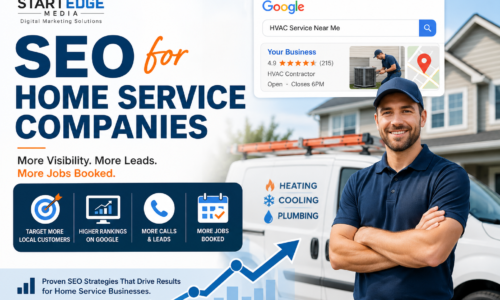
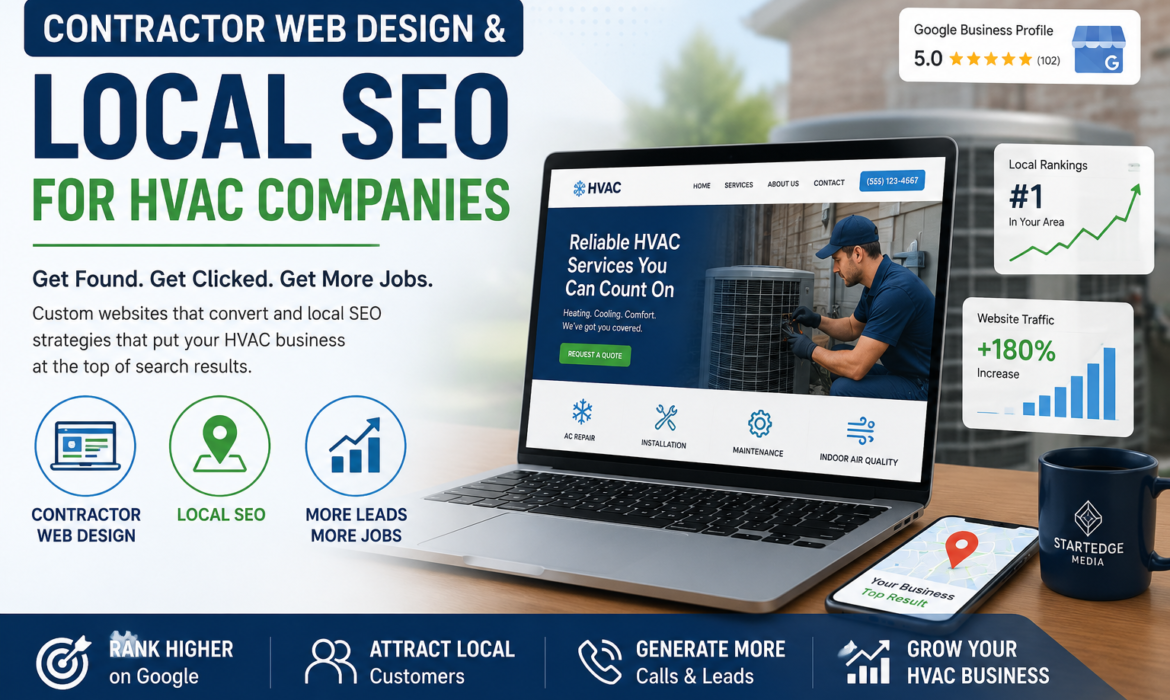
This guide breaks down what actually moves the needle in 2026: contractor web design and local SEO for HVAC companies, HVAC lead generation, plumbing lead generation, and SEO for home service companies — plus how to optimize your site so it shows up in AI-powered answer engines like Google’s AI Overviews, ChatGPT, and Perplexity (a practice known as AEO and GEO).
Why Contractor Web Design Is the Foundation of Everything Else ?
Before SEO, before ads, before lead gen funnels — your website has to do its job: convert a visitor into a phone call or a booked appointment. Strong contractor web design isn’t about looking pretty. It’s about:
- Fast load times. Most homeowners searching for “AC repair near me” are on their phones with an emergency. If your site takes more than 3 seconds to load, they’re gone.
- Mobile-first layout. Over half of home service searches happen on a phone. Click-to-call buttons, sticky quote request forms, and thumb-friendly navigation aren’t optional anymore.
- Trust signals above the fold. Licensing info, reviews, service area, and years in business need to be visible immediately — homeowners are inviting a stranger into their house.
- Clear service pages. A generic “Services” page that lists everything in one paragraph won’t rank. Each core service (AC repair, water heater installation, drain cleaning) deserves its own optimized page.
- Built-in conversion paths. Every page should make it obvious how to book: call button, form, chat widget, or online scheduling.
A contractor website built with these fundamentals becomes the base layer that local SEO and lead generation campaigns are built on top of. Skip this step, and you’re pouring traffic into a leaky bucket.
Local SEO for HVAC Companies: How to Actually Rank in Your Service Area
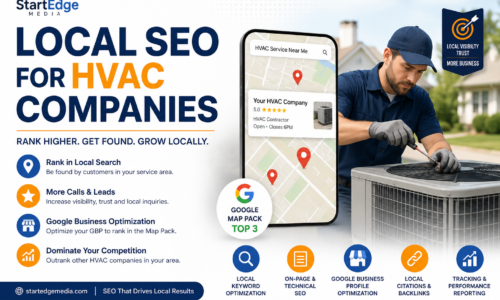
Local SEO for HVAC companies is different from general SEO because most searches are hyper-local and often urgent (“furnace not working,” “emergency AC repair,” “HVAC company near me”). Here’s what matters most:
1. Google Business Profile Optimization
Your Google Business Profile is often the first thing a potential customer sees. Keep it updated with accurate hours, service categories, service area, photos of completed jobs, and consistent review responses.
2. Localized Service Pages
Instead of one page trying to rank for every city you serve, build individual pages for each major service area (e.g., “AC Repair in [City]”) with unique content, not duplicated templates.
3. NAP Consistency
Your Name, Address, and Phone number need to match exactly across your website, Google Business Profile, and every directory (Yelp, Angi, HomeAdvisor, BBB). Inconsistencies quietly hurt rankings.
4. Local Link Building and Citations
Getting listed in local directories, chamber of commerce sites, and partnering with local suppliers or home builders for backlinks builds the local authority Google rewards.
5. Reviews as a Ranking Factor
Review volume, recency, and response rate all factor into local rankings — and directly influence whether a homeowner picks up the phone. A steady stream of fresh 5-star reviews outperforms a stagnant pile from three years ago.
6. Schema Markup for Local Business
Structured data (LocalBusiness, Service, and Review schema) helps Google — and increasingly AI search tools — understand exactly what you do, where you work, and how well customers rate you.
HVAC Lead Generation: Turning Rankings Into Booked Jobs
Ranking well is only half the battle. HVAC lead generation is about converting that visibility into actual calls and jobs. The most effective strategies combine:
- SEO-driven organic traffic for long-term, low-cost-per-lead growth
- Google Local Services Ads (LSAs) for pay-per-lead visibility at the top of search results, especially valuable for emergency and seasonal demand
- Google Ads (PPC) for immediate visibility on high-intent keywords like “furnace repair near me”
- Retargeting campaigns to bring back homeowners who visited but didn’t call
- Seasonal campaign timing — pushing AC tune-up promotions in spring and heating system checks in fall, when search volume naturally spikes
- Landing pages built for one job — a dedicated page for “Emergency AC Repair” converts far better than sending that traffic to a generic homepage
The strongest HVAC lead generation systems don’t rely on a single channel. They layer organic SEO (compounding value over time) with paid ads (immediate volume) and a website built to convert both.
Plumbing Lead Generation: What Makes It Different From HVAC
Plumbing lead generation shares a lot of DNA with HVAC marketing, but plumbing searches skew even more toward true emergencies — burst pipes, overflowing toilets, no hot water. That changes the strategy slightly:
- 24/7 availability messaging needs to be front and center, since plumbing emergencies don’t wait for business hours
- Emergency-specific landing pages (burst pipe repair, sewer backup, water heater failure) should be built to load instantly and convert with one tap
- Local Services Ads tend to perform exceptionally well for plumbers because of the “Google Guaranteed” trust badge, which matters when someone is letting a stranger into their home during a crisis
- Review generation after every job, not just the big ones — plumbing customers often forget to leave reviews once the crisis is resolved, so automated review requests matter more here than almost any other trade
SEO for Home Service Companies: The Bigger Picture
Whether you’re in HVAC, plumbing, electrical, roofing, or landscaping, SEO for home service companies rests on the same core pillars:
- Technical SEO — fast, secure, mobile-friendly, crawlable site architecture
- On-page SEO — keyword-optimized titles, headers, service pages, and internal linking
- Local SEO — Google Business Profile, citations, localized content
- Content marketing — blog posts and FAQ pages that answer real customer questions (which also feeds directly into AEO/GEO, below)
- Authority building — backlinks from local and industry-relevant sites
- Conversion rate optimization — because ranking #1 means nothing if visitors don’t call
The home service companies that grow fastest treat SEO as an ongoing system, not a one-time project. Search algorithms evolve, competitors adjust, and service areas shift — so the strategy has to stay active.
AEO and GEO: Optimizing for AI Search, Not Just Google
Traditional SEO gets you ranked on a search results page. Answer Engine Optimization (AEO) and Generative Engine Optimization (GEO) get you cited inside AI-generated answers — in tools like Google AI Overviews, ChatGPT, and Perplexity, where more homeowners are starting their search for a contractor.
To optimize for these engines:
- Write in a clear question-and-answer format. AI tools pull directly from content structured around real questions (see the FAQ section below).
- Answer the question in the first sentence. AI engines favor direct, front-loaded answers over long buildups.
- Use structured data (FAQ schema, LocalBusiness schema). This gives AI crawlers machine-readable context about your business.
- Build topical depth. A site with genuinely useful, specific content on HVAC repair, plumbing emergencies, and local service areas earns more AI citations than a thin, generic site.
- Keep facts consistent across the web. AI models cross-reference multiple sources; inconsistent business details (hours, service area, pricing) reduce the likelihood of being cited confidently.
AEO and GEO aren’t a replacement for traditional SEO — they’re an extension of it. The same well-structured, authoritative content that ranks on Google is exactly what AI engines pull from to generate answers.
Frequently Asked Questions
What is contractor web design and why does it matter for HVAC and plumbing companies?
Contractor web design is the process of building a website specifically optimized for home service businesses — fast load times, mobile-first layouts, clear service pages, and strong calls to action. It matters because most homeowners searching for HVAC or plumbing help are on their phones and often in an urgent situation, so a slow or confusing site directly costs a business jobs.
How is local SEO for HVAC companies different from regular SEO?
Local SEO for HVAC companies focuses on ranking for searches tied to a specific service area, such as “AC repair near me” or “HVAC company in [city].” It relies heavily on Google Business Profile optimization, local citations, localized service pages, and reviews — factors that matter far less for businesses without a physical service radius.
What’s the fastest way to generate HVAC leads?
The fastest results typically come from Google Local Services Ads and Google Ads (PPC), since they place a business at the top of search results immediately. Organic local SEO takes longer to build but produces lower-cost leads over time. Most successful HVAC companies use both together.
How do plumbing companies generate more emergency leads?
Plumbing companies generate more emergency leads by building dedicated, fast-loading landing pages for specific emergencies (burst pipes, no hot water, sewer backups), running Local Services Ads for the “Google Guaranteed” trust badge, and prominently displaying 24/7 availability across the site and Google Business Profile.
What does SEO for home service companies typically include?
SEO for home service companies typically includes technical site optimization, on-page keyword targeting, local SEO (Google Business Profile and citations), content marketing through blogs and FAQs, backlink building, and conversion rate optimization to turn traffic into booked jobs.
What is AEO and GEO, and why should home service businesses care?
AEO (Answer Engine Optimization) and GEO (Generative Engine Optimization) are the practices of structuring website content so AI tools like Google AI Overviews, ChatGPT, and Perplexity can understand and cite it directly in generated answers. As more homeowners ask AI tools “who’s a good plumber near me,” businesses that structure their content clearly — with direct answers, FAQ schema, and consistent business information — are more likely to be recommended.
How long does it take to see results from HVAC or plumbing SEO?
Most home service companies start seeing meaningful movement in local rankings within 3–6 months, with stronger compounding results after 6–12 months of consistent optimization, content publishing, and review generation. Paid channels like Local Services Ads and PPC can generate leads immediately while organic SEO builds momentum in the background.
Ready to Grow Your Home Service Business?
A high-converting contractor website combined with local SEO, targeted lead generation, and AEO/GEO-ready content is what separates home service companies that are booked solid from those still chasing the phone to ring. If you’re ready to build a system that brings in consistent HVAC and plumbing leads, explore how a dedicated SEO strategy can work for your business at Start Edge Media’s SEO Services.